Sabalenka vs. Rybakina: Two Queens Collide in 2026 US Open Final
admin
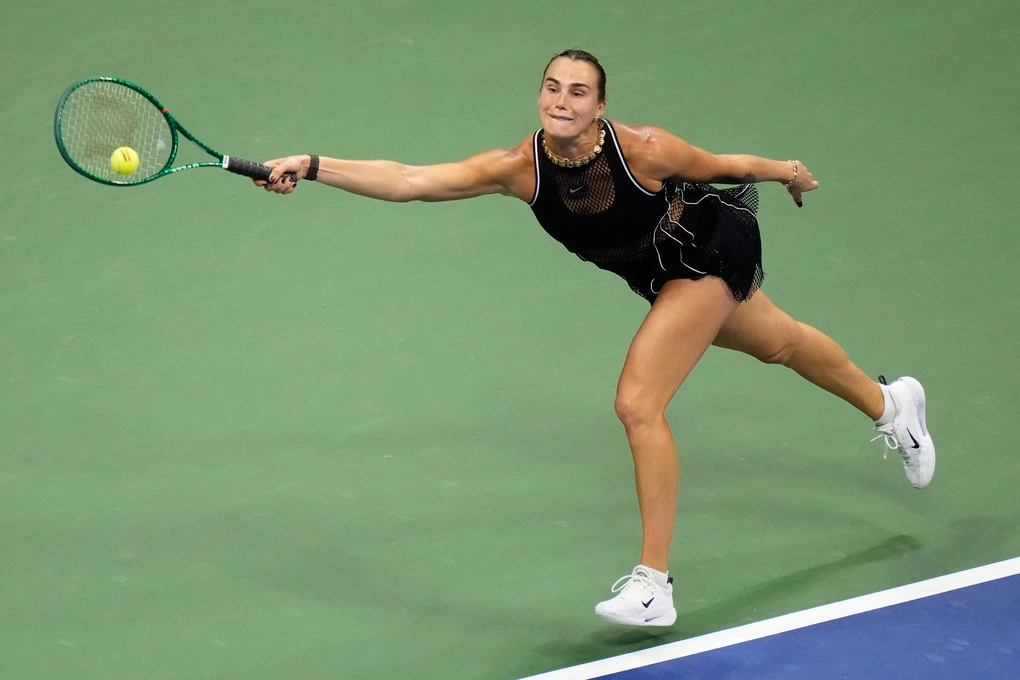
Aryna Sabalenka will lose the WTA No. 1 ranking to Elena Rybakina next week, but the Belarusian star still has a chance to defend her US Open crown when the two rivals meet in the 2026 women’s final.
Sabalenka vs. Rybakina: 4 p.m. ET Saturday, September 12 / 3 a.m. Sunday, September 13 in Hanoi.
When Aryna Sabalenka and Elena Rybakina walk onto Arthur Ashe Stadium for the 2026 US Open final, the battle for the world No. 1 ranking will already be settled.
Rybakina is guaranteed to take over the top spot in the WTA rankings when the new standings are released on September 14, regardless of what happens in the championship match.
But one major prize remains undecided: the US Open trophy.
And Sabalenka has no intention of surrendering it easily.
Sabalenka Chasing Historic US Open Three-Peat
Sabalenka enters the final with an opportunity to win the US Open for a third consecutive year.
If she succeeds, she would become the first woman since Serena Williams in 2014 to win three straight singles titles at Flushing Meadows. She would also join a very exclusive group of players to accomplish the feat during the Open Era.
The Belarusian’s dominance in New York goes beyond her title streak.
This will be Sabalenka’s fourth consecutive US Open final, underlining her remarkable consistency on hard courts. She has also reached eight consecutive Grand Slam hard-court finals dating back to the 2023 Australian Open, establishing herself as the dominant player on the surface.
Sabalenka also carries a 19-match US Open winning streak into the final. One more victory would complete another historic championship run in New York.
Standing in her way, however, is arguably the player best equipped to end that streak.
Rybakina Overcomes Injury Concerns to Reach Final
Elena Rybakina arrived in New York with questions surrounding an Achilles issue that had affected her preparation.
At one point, there was uncertainty over whether she would even be ready to compete at the US Open. Her final preparation was limited, but Rybakina has steadily improved as the tournament has progressed.
Her run became even more significant in the quarterfinals, when she defeated Zheng Qinwen and secured enough ranking points to guarantee her first career rise to world No. 1.
Rybakina then came from behind against Coco Gauff in the semifinals, earning a 3-6, 6-4, 6-4 victory to reach the championship match.
The 27-year-old now has an opportunity to cap an unforgettable tournament with her third Grand Slam singles title.
Rybakina previously won Wimbledon in 2022 before capturing the 2026 Australian Open championship.
A victory in New York would give her another major trophy and make her rise to No. 1 even more meaningful.
Sabalenka vs. Rybakina Head-to-Head
The 2026 US Open final adds another chapter to one of the WTA Tour’s most compelling modern rivalries.
Sabalenka leads their head-to-head series 10-7 through 17 meetings.
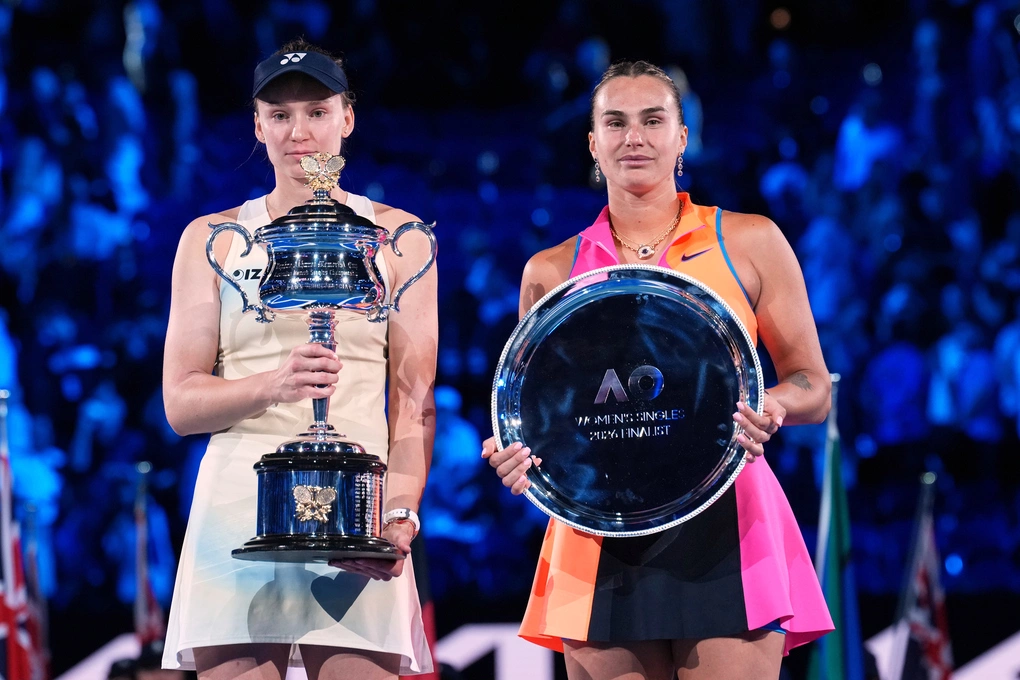
The two power hitters have also faced each other twice in Grand Slam finals, both at the Australian Open.
Sabalenka won their 2023 championship meeting, while Rybakina got her revenge by defeating the Belarusian in the 2026 Australian Open final.
Their rivalry has continued throughout the current season.
Sabalenka has had the advantage in their most recent encounters, defeating Rybakina in the Indian Wells final before beating her again in Miami.
Those victories demonstrated Sabalenka’s improving ability to deal with perhaps Rybakina’s biggest weapon — her serve.
Rybakina’s Serve Could Be the Key
At 6-foot-0, Rybakina possesses one of the most dangerous serves in women’s tennis.
Her height allows her to make contact with the ball from a high point, generating both speed and difficult angles.
But Rybakina’s biggest advantage often comes immediately after the serve.
When her first serve forces a weak return, she is excellent at stepping forward and taking control of the rally with the next shot. Many of her service points can be decided within only a few strokes.
Against most opponents, that combination is extremely difficult to stop.
Sabalenka, however, has the return game and aggressive court positioning required to put Rybakina under pressure.
The Belarusian frequently positions herself close to the baseline on returns and attacks second serves immediately.
If Rybakina’s first-serve percentage drops, Sabalenka will have opportunities to turn the Kazakh star’s service games into aggressive baseline exchanges.
That battle could determine the outcome of the final.
Sabalenka Bringing Relentless Baseline Pressure
Sabalenka has a similar attacking structure in her own game.
She can dominate points with her serve, but she is equally dangerous once the rally begins.
Her forehand and backhand are both capable of producing winners from almost anywhere around the baseline. She is also comfortable stepping inside the court and taking the ball early, reducing her opponent’s reaction time.
Her semifinal performance against Jessica Pegula showed how difficult that style can be to handle.
Sabalenka defeated Pegula 7-5, 6-2, finishing with 29 winners and seven aces.
After a competitive opening set, Sabalenka’s constant pressure from the baseline became increasingly difficult for Pegula to manage.
The American won only 26% of her second-serve points.
Rybakina could face a similar challenge if she allows Sabalenka to regularly attack her second serve.
Return of Serve May Decide the US Open Final
Although Sabalenka and Rybakina are both known for their serves, the final may ultimately come down to which player returns better.
If Rybakina consistently lands her first serve, she can immediately force Sabalenka into defensive positions.
If she misses too many first serves, however, Sabalenka could quickly take control by attacking the second delivery.
The situation is similar on the other side.
Rybakina needs to find enough opportunities on Sabalenka’s serve to prevent the defending champion from dictating every service game.
Rybakina does not rely on defensive movement in the same way as Coco Gauff, but her clean, flat groundstrokes allow her to redirect pace extremely well.
She is especially dangerous when she can absorb a powerful shot and change direction without giving up court position.
Against Sabalenka, that ability will be crucial.
Power vs. Power, Emotion vs. Composure
The similarities between the two players’ games make their contrasting personalities even more noticeable.
Sabalenka wears her emotions openly on the court.
Her matches regularly feature loud celebrations, fist pumps and visible frustration when things are not going her way.
Rybakina presents almost the opposite image.
Whether she has just hit a winner or made an important mistake, her expression often remains unchanged.
That contrast has become part of what makes their rivalry so fascinating.
One player competes with visible intensity. The other maintains an almost constant sense of calm.
But once the ball is in play, both are trying to achieve much the same thing.
They serve big, strike the ball aggressively, take control of the baseline and look to finish points before their opponent can settle into a defensive rhythm.
Rybakina Trying to Keep Pressure Under Control
Despite knowing that she will become world No. 1, Rybakina has tried to avoid putting additional pressure on herself heading into the championship match.
She has emphasized the importance of staying focused on her game rather than the ranking.
Rybakina has also acknowledged that playing major matches against Sabalenka over the years has helped both players develop.
Their rivalry has regularly forced each of them to find new tactical solutions, particularly when trying to protect their own service games or gain control of the baseline.
Saturday’s final will provide the biggest test yet.
Sabalenka Finds Her Form Again in New York
Sabalenka also enters the final with renewed confidence after a more difficult period earlier in the season.
Following her successful March campaign, when she completed the Sunshine Double by winning Indian Wells and Miami, her form became less consistent.
There were stretches in which she struggled to reach finals and admitted that disappointing results had begun to affect her mentally.
The US Open has changed that.
Back at Arthur Ashe Stadium, Sabalenka once again looks comfortable playing the aggressive tennis that has made her one of the most successful Grand Slam players of her generation.
New York has become one of her strongest venues.
Now she is one victory away from completing a historic three-peat.
Can Rybakina Complete the Changing of the Guard?
Rybakina already knows she will leave New York with one major achievement.
On September 14, she will officially become the No. 1 women’s tennis player in the world.
Winning the US Open would make that moment even more significant.
Beating Sabalenka — the reigning champion and player she is replacing at No. 1 — would represent a symbolic changing of the guard at the top of women’s tennis.
For Sabalenka, the ranking may already be gone, but the championship remains hers to defend.
For Rybakina, becoming No. 1 is guaranteed.
Becoming US Open champion is not.
That is what makes the 2026 US Open women’s final much more than another meeting between two familiar rivals.
It is a battle between the outgoing world No. 1 and her successor, between the defending champion and the Australian Open winner, and between two of the most powerful players in women’s tennis.
Only one will leave Arthur Ashe Stadium with the trophy.
SEO Meta Description: Aryna Sabalenka faces Elena Rybakina in the 2026 US Open women’s final as Sabalenka chases a historic three-peat and Rybakina prepares to become world No. 1.
Primary SEO Keyword: Sabalenka vs Rybakina US Open 2026
Secondary Keywords: US Open 2026 women’s final, Aryna Sabalenka vs Elena Rybakina, Sabalenka Rybakina prediction, Elena Rybakina world No. 1, Aryna Sabalenka US Open, US Open women’s final 2026


Leave a Reply